MK-Ultra and Heroin in Italy: Separating Historical Facts from Myth

by Adelio Debenedetti, author of The Naacal Protocol – Code 211

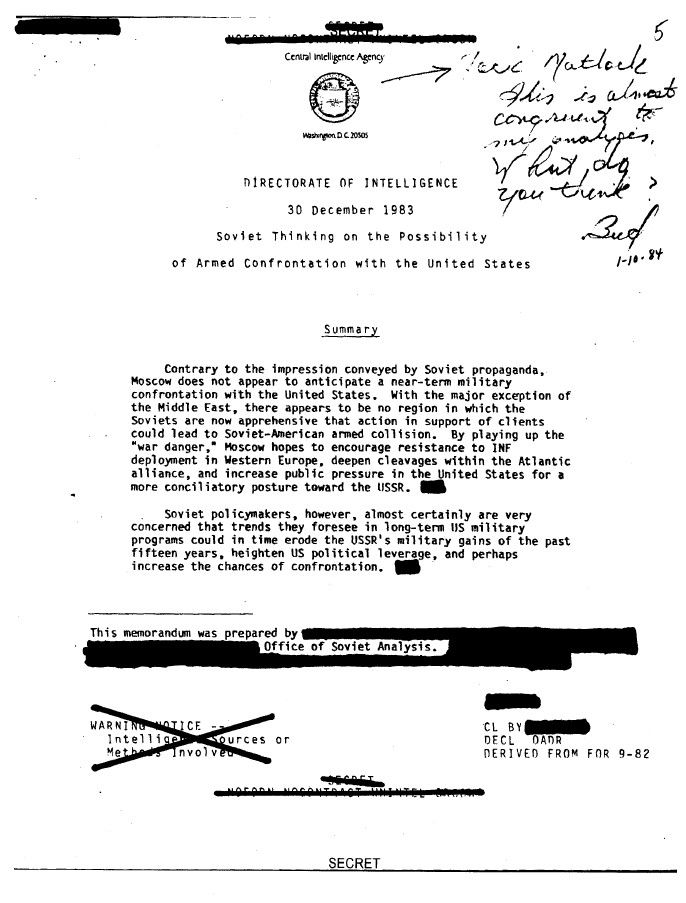
Source: Wikimedia Commons, declassified documents related to the CIA’s MK-Ultra program (Public Domain, U.S. Government)
From time to time, especially online, a disturbing claim resurfaces: the CIA deliberately introduced heroin into Italy as a tool of social control, allegedly connected to the infamous MK-Ultra program.
It is a narrative that works remarkably well. It combines secrecy, intelligence agencies, drugs, and a genuine historical trauma.But how much of it is true?
The short answer is: there is no historical or documentary evidence supporting a direct link.The longer answer, however, is far more revealing.
What MK-Ultra Really Was
MK-Ultra was a covert research program run by the CIA from the early 1950s through the mid-1960s, focused on mind control and behavioral manipulation.
Declassified documents and congressional investigations in the 1970s revealed experiments involving:
LSD and other psychoactive substances
hypnosis
sensory deprivation
electroshock
In many cases, these experiments were conducted on unwitting subjects, raising serious ethical and legal concerns.
Crucially, MK-Ultra was designed around individual-level control: interrogation techniques, resistance to coercion, psychological influence.There is no evidence that it was intended as a mass drug-distribution strategy or a form of population-wide social engineering.
Heroin in Italy: A Real and Devastating Phenomenon
During the 1970s and 1980s, Italy experienced a dramatic heroin epidemic. Entire neighborhoods were affected, a generation was scarred, and the country faced a severe public health and social crisis.
This unfolded in a highly volatile context:
political extremism and domestic terrorism
ideological polarization
institutional fragility
It is within this setting that the idea of drugs as a deliberate tool of social control gained traction. The logic is emotionally compelling: such devastation must have been planned.
Yet this interpretation moves from political analysis into speculative attribution, unsupported by historical proof.
The Documented Supply Chain: The French Connection
Judicial investigations and historical research point to a well-documented network known as the French Connection:
morphine base sourced from Turkey
refining in clandestine laboratories in Marseille
distribution handled by Corsican criminal networks and Cosa Nostra
penetration into European markets, including Italy
This was a criminal enterprise, driven by organized crime and facilitated by enforcement failures—not a centrally orchestrated intelligence operation.

Source: Wikimedia Commons, official portrait of Allen W. Dulles, U.S. Government photograph (Public Domain)
Why the CIA Is Always Brought Into the Story
Three factors explain the persistence of this narrative:
The CIA did tolerate drug trafficking in specific Cold War theaters, particularly in Southeast Asia, where anti-communist priorities sometimes overrode law enforcement. This is historically documented.
MK-Ultra has become a symbol of unchecked intelligence power, making it an ideal container for broader suspicions.
The concept of “social control” offers a simplified explanation for a complex and painful historical reality.
Over time, suggestion replaced evidence.
What Can Be Said with Historical Rigor
The CIA experimented with drugs — true
MK-Ultra existed and involved systemic abuse — true
Heroin devastated Italy — true
However:
there is no documentary proof linking MK-Ultra to the deliberate introduction of heroin in Italy
there is no evidence of a planned mass drug-distribution strategy by U.S. intelligence in Western Europe
Until new sources emerge, history stops here.
The Grey Zone That Sustains the Myth
The absence of definitive answers leaves space for ambiguity. Cold War priorities, intelligence blind spots, organized crime, and political cynicism created grey zones where indirect responsibility and strategic tolerance sometimes overlapped.
Acknowledging this is not conspiracy thinking. It is historical honesty.
What remains unsupported is the leap toward a coordinated plan to chemically pacify an entire society.
MK-Ultra does not explain heroin in Italy.But it does explain why people believe it might.
Perhaps the deeper question is not who introduced the drug, but how much human cost Western institutions were willing to accept during the Cold War.
These reflections on Cold War grey zones and the boundary between documented history and narrative interpretation also inform my work in geopolitical fiction, particularly in Il Protocollo Naacal – Code 211.


Comments