The Archive of Power: How Intelligence Agencies Construct Hidden Narratives

By Adelio Debenedetti – Archive 211
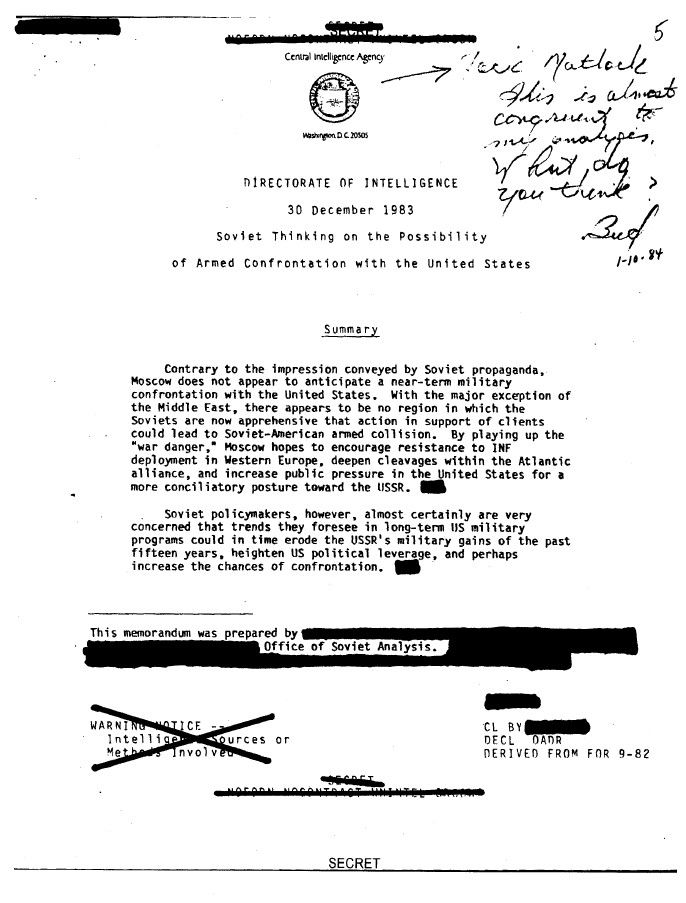
Source: Public Domain (U.S. Government – declassified CIA document)
Every great power maintains two versions of its history: the official one taught in schools, and the classified one used to guide real decisions. The first explains ideals; the second explains actions.The distance between these two narratives is not an accident — it is a deliberate instrument of statecraft.
The hidden narrative is the Archive of Power: the internal framework that intelligence agencies use to interpret the world, anticipate threats, and justify covert operations. It is not a physical archive. It is a cognitive architecture, designed to endure beyond political cycles.
The strategic function of hidden narratives
States cannot survive on ideology alone. Intelligence services require continuity — a way to align generations of operatives around a shared understanding of danger, vulnerability, and national destiny.
Hidden narratives provide exactly that:
a long-term view of rivals and allies
a structural map of threat evolution
a justification for secrecy and deception
a logic that connects isolated events into coherent patterns
These narratives are not crafted for public consumption.They are built to make sense of a world where information is incomplete, intentions are concealed, and perception is as important as reality.
In the intelligence domain, a hidden narrative is not a story. It is an operating system.
The mechanics of narrative construction
Behind the scenes, intelligence analysts shape reality through a disciplined process of:
1. Threat Classification
Evaluating actors based on capabilities, interests, and patterns of behavior — not on public rhetoric.
2. Interpretive Framing
Building internal models that explain why events happen, what they signify, and how they connect to long-term strategic pressures.
3. Historical Curation
Selecting which past events matter for current doctrine, and which must be quietly archived away.
4. Symbolic Encoding
Embedding missions, operations, and entire regions within visual and linguistic codes that reinforce institutional memory.
5. Controlled Ambiguity
Maintaining uncertainty as a strategic tool — allowing a range of interpretations that increase operational flexibility.
This system allows a state to respond rapidly to crises, maintain cohesion within intelligence networks, and legitimize actions that would otherwise appear incomprehensible.

Source: License: Public Domain (U.S. Government)
Narratives that transcend politics
Governments change.Intelligence narratives do not.
They survive elections, leadership transitions, and ideological shifts because they reflect structural constants, not political preferences.
Among these constants:
territorial vulnerabilities
resource dependencies
demographic pressures
technological rivalries
historical grievances
psychological fault lines within societies
These elements form the backbone of the Archive of Power — the deep structure that shapes how a state thinks, reacts, and prepares for the future.
When hidden narratives become doctrine
Once refined, these internal frameworks evolve into operational doctrine, influencing:
covert action
cyber operations
psychological influence campaigns
alliance-building
threat escalation and de-escalation
cognitive-warfare strategies
The public sees fragments — speeches, press releases, diplomatic gestures.But behind every visible decision lies an invisible narrative model, the same one that determines how events are interpreted inside secure rooms.
In this sense, intelligence agencies do not merely gather information.They produce meaning.

Source: License Public Domain (U.S. Government)
The Naacal Protocol – Code 211: narrative as weapon system
In The Naacal Protocol – Code 211, the Archive of Power becomes more than an analytical tool. It becomes the battleground.
The fictional system draws on:
ancient symbolic architectures
postwar experiments in perception
cognitive-fragmentation doctrines
neuro-algorithmic models of attention and behavior
This narrative architecture does not influence opinions — it rewires the framework through which opinions form. It does not manipulate facts — it manipulates interpretation.
In the world of Code 211, the true weapon is not information. It is the ability to define how information is understood.
Why hidden narratives matter now
As global competition accelerates, conflicts are increasingly fought in the cognitive domain — the space where meaning is created, where identity is shaped, and where perception becomes strategic advantage.
In this environment:
a coherent narrative provides resilience
a fragmented narrative creates vulnerability
the absence of narrative becomes a national threat
The Archive of Power is the shield and the sword of the intelligence world. It ensures that nations do not simply react to events, but interpret them in ways that reinforce strategic survival.
The future of geopolitics will not be decided by territory, resources, or even technology alone. It will be decided by who controls the architecture of interpretation — the hidden narrative frameworks that define how societies understand reality.
And that is the arena where The Naacal Protocol – Code 211 unfolds:the frontier between perception and power.
To explore how cognitive warfare and perception engineering shape the world of The Naacal Protocol – Code 211, visit my official site to https://www.protocollonaacal.it/en and continue your journey into Archive 211. Awareness begins with understanding.
Article by Adelio Debenedetti, author of The Naacal Protocol – Code 211. A narrative research project exploring power, perception, and modern cognitive warfare.


Comments