The Silent War for Attention: How Nations Compete in the Cognitive Domain

By Adelio Debenedetti – Archive 211

Source: Wikimedia / StratCom COE
There is a new battlefield where no soldiers march, no borders shift, and no satellites detect troop movements. Yet it is the most contested strategic space of the 21st century.
It is the attention span of billions of individuals.
Nations are no longer fighting solely for territory or resources. They are fighting for the ability to shape what people focus on—and, indirectly, how they understand the world. This silent struggle, conducted through data, algorithms, and psychological triggers, represents the evolution of geopolitical competition.
In the cognitive domain, attention is the new oil: scarce, valuable, and fiercely exploited.
The shift: from controlling information to controlling focus
During the Cold War, states tried to dominate the information environment through propaganda, censorship, and ideological campaigns. Today, these tools are outdated. The challenge is not to control what information exists, but to control what information reaches the mind.
This shift has profound implications:
Information abundance produces confusion, not clarity.
Attention becomes the filtering mechanism.
Whoever controls the filter controls the worldview.
Governments, intelligence agencies, and corporations now compete to engineer perception corridors, environments in which individuals encounter a curated slice of reality designed to guide interpretation without overt manipulation.
This is attention warfare: not persuading populations, but directing their gaze.

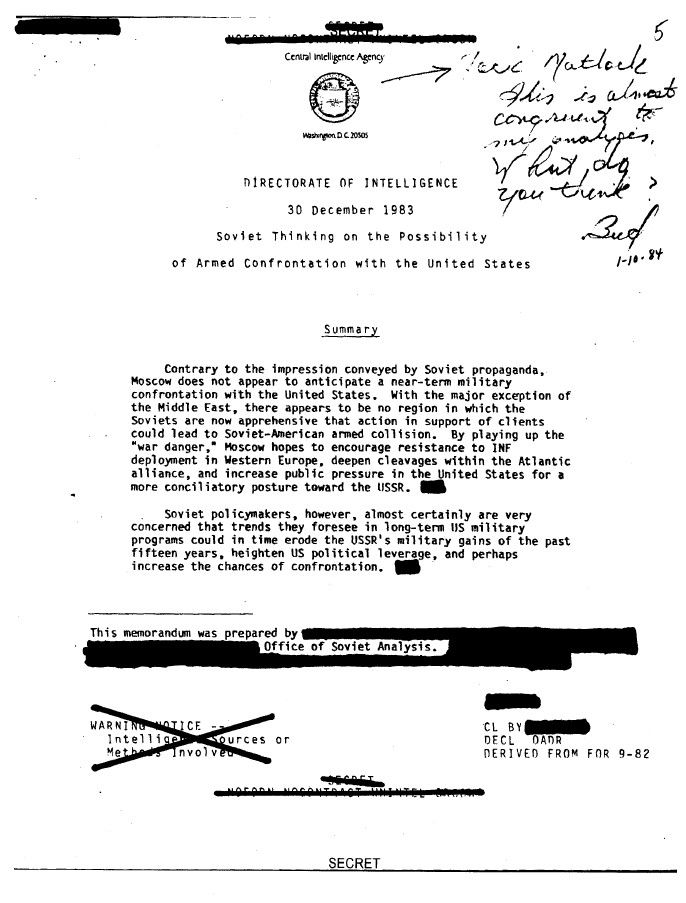
Source: U.S. Government, Public Domain
Algorithms as geopolitical actors
Once considered neutral tools, algorithms now function as active geopolitical agents.
A recommendation system can:
amplify dissent
manufacture outrage
isolate ideological groups
manipulate emotional baselines
divert public focus away from strategic issues
And it can do so without human intervention.
This automated influence represents a structural challenge for democracies. As Dario Fabbri would note, states act in pursuit of interests, not ideals—and the power to steer attention provides a decisive strategic advantage.
Whoever shapes attention shapes interpretation.And whoever shapes interpretation shapes political reality.
The fragmentation of collective perception
Attention warfare leads to a phenomenon intelligence analysts call cognitive atomization. Instead of a shared national narrative, societies fracture into micro-realities, each governed by its own algorithmic logic.
The consequences are enormous:
polarization becomes structural
consensus becomes impossible
institutions lose gravitational force
public discourse collapses into emotional silos
Nations are not weakened by overt attacks.They are weakened by divided focus.
An adversary does not need to control every mind. It needs only to ensure that minds never converge.

Source: Wikimedia Commons – neural network diagram
Military and intelligence adoption
Within NATO, the Pentagon, and several Eastern intelligence blocs, attention warfare has moved from theory to practice.
Strategic documents now refer to:
Cognitive EffectorsTools designed to modulate emotional responses and attention patterns.
Narrative Operational UnitsTeams focused on shaping interpretive frames rather than issuing propaganda.
Digital Force ProjectionThe ability to destabilize an adversary by overwhelming or redirecting its attention.
Precision InfluenceMicro-targeted perception shaping, calibrated to psychological profiles.
What began as advertising technology has become a military capability.
This is not science fiction. It is doctrine.
The Naacal Protocol – Code 211 connection
In The Naacal Protocol – Code 211, attention warfare is not simply referenced—it is central. Code 211 uses symbolic sequences, neurotech, and AI-driven behavioral prediction to create perceptual corridors as cognitive domain so narrow that targets believe they are acting freely even as their focus is being guided. The fictional system reflects a real geopolitical trend:the fusion of ancient perception techniques with modern algorithmic steering.
What the Naacal once achieved through symbolic encoding, modern powers pursue through data-driven manipulation.
Why this matters
Attention warfare is silent, pervasive, and nearly invisible. It reshapes societies without violence and influences decisions without direct coercion.
Its dangers lie in what it does not announce:
no declaration of war
no soldiers deployed
no borders violated
no evidence left behind
And yet, entire populations can be redirected, destabilized, or pacified simply by shaping what they are allowed to notice. The future of conflict will not be decided by superior firepower, but by superior attention architecture. In a world defined by noise, the true power belongs to whoever controls the signal.
Explore more: visit the official project hub at www.protocollonaacal.it/en/blog for in-depth articles, behind-the-scenes research, and direct links to the novel Il Protocollo Naacal – Codice 211.
Article by Adelio Debenedetti, author of The Naacal Protocol – Code 211. A narrative research project exploring power, perception, and modern cognitive warfare.


Comments