The Arctic and the Return of Imperial Logic

Why Svalbard, the GIUK Gap and Arctic geopolitics are reshaping the future competition between the United States and Russia
by Adelio Debenedetti, author of The Naacal Protocol – Code 211

Imperial Logic Is About Presence Before Conquest. They position themselves inside it long before that territory becomes indispensable. That is the real key to understanding the Arctic in 2026. Not as a frozen periphery at the edge of the map, but as one of the most important laboratories of emerging geopolitical power. The United States and Russia approach the region through different strategic cultures, almost opposite in nature, yet both are converging toward the same conclusion:
whoever remains absent from the Arctic today may lose influence over the future global order tomorrow.
Russia and the return of Arctic strategic depth
Russia continues to think like a continental power. Moscow views the Arctic as:strategic depth,resource security,maritime sovereigntyand geopolitical continuity. The Northern Sea Route is no longer merely an economic corridor. It is becoming part of Russia’s long-term strategic geography — a northern artery connecting energy exports, military mobility and Arctic influence across Eurasia. The United States approaches the region differently. Washington operates as an oceanic and technological power. For the U.S., the Arctic is not simply about resources. It is about: missile warning systems, satellite architecture, homeland defense, undersea infrastructure,North Atlantic accessand Arctic surveillance capabilities. This is why the Arctic is no longer treated as a secondary theater inside NATO strategy. The accession of Finland and Sweden into NATO has fundamentally altered the strategic geometry of the High North. At the same time, Russian naval modernization and growing cooperation between Moscow and Beijing have accelerated Western attention toward Arctic security and North Atlantic deterrence.

Why Svalbard matters in Arctic geopolitics
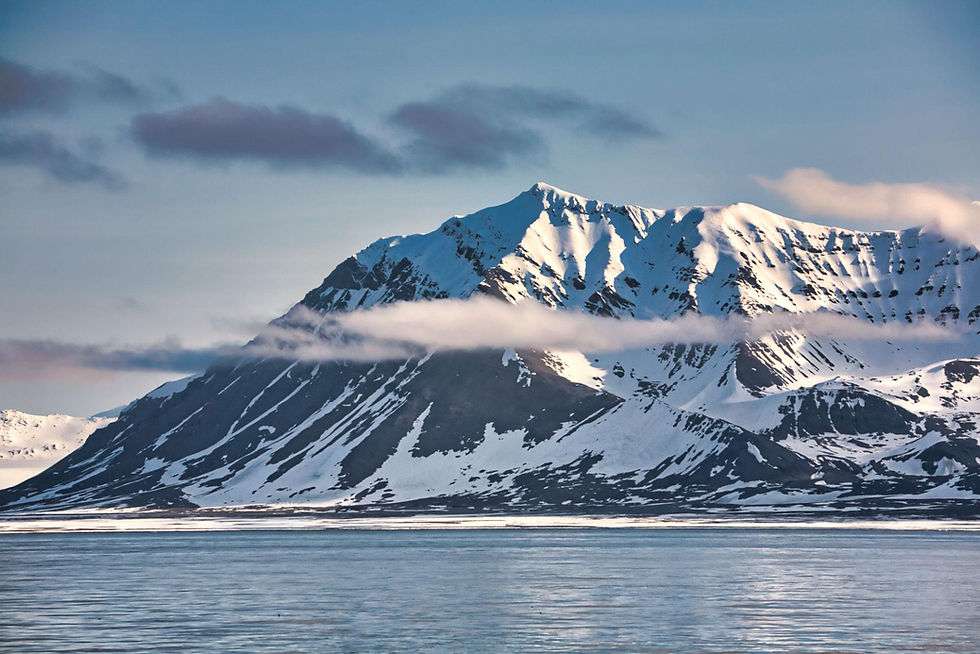
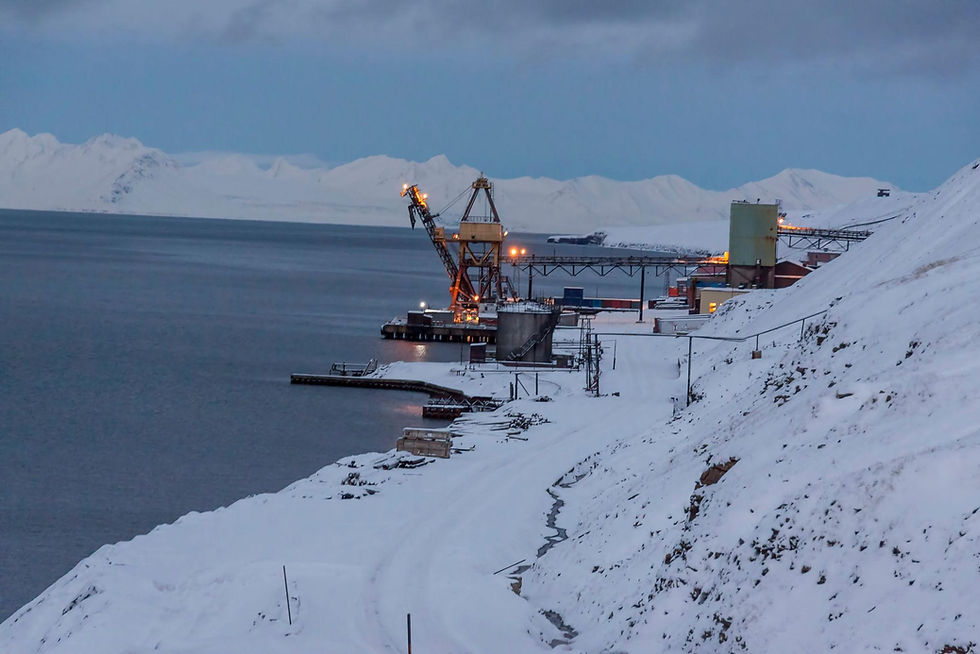
Inside this broader transformation, Svalbard becomes far more than a remote Norwegian archipelago. It becomes a geopolitical lens. At first glance, Svalbard still appears deceptively civilian:scientific stations,polar tourism,mining settlements,small local communities. But modern geopolitical competition increasingly operates through infrastructure whose strategic significance exceeds its formal civilian role. That is precisely why Barentsburg matters. Economically, the Russian mining settlement makes limited sense. The costs of maintaining Arctic infrastructure are enormous.Coal extraction profitability has weakened.Logistical isolation remains extreme. Yet Russia continues supporting the settlement because its true value is geopolitical rather than industrial. Barentsburg functions as a permanent Russian foothold inside NATO territory under the legal framework of the Svalbard Treaty. And that changes everything.
The settlement is not merely a town. It is continuity. Presence. Strategic positioning. This is how modern grey zone competition increasingly works. Major powers no longer rely exclusively on overt military expansion. Influence can now be maintained through: civilian infrastructure, scientific legitimacy, logistical continuity, legal agreements and persistent territorial presence below the threshold of direct confrontation.
The GIUK Gap and the new strategic map of the North Atlantic
The Arctic is becoming one of the clearest examples of this transformation. A port may remain civilian while acquiring strategic value.A scientific facility may reinforce geopolitical legitimacy.A mining settlement may preserve long-term access inside contested strategic space. In this environment, ambiguity itself becomes operational. The strategic importance of Svalbard expands even further when viewed together with the GIUK Gap — the maritime corridor between Greenland, Iceland and the United Kingdom that remains one of NATO’s most critical strategic chokepoints. During the Cold War, the GIUK Gap represented the containment line against Soviet submarine access to the Atlantic. Today, its relevance is returning under a new strategic reality shaped by:Arctic geopolitics,submarine mobility,undersea infrastructure vulnerability, satellite surveillanceand renewed great-power competition. The northern strategic map is reconnecting. Svalbard, Greenland, Arctic sea lanes, satellite coverage, submarine transit corridors and undersea communications infrastructure increasingly form part of the same geopolitical system.
Greenland, NATO and the future of Arctic strategy

This is why Greenland itself has regained strategic centrality for Washington. The American military presence at Pituffik Space Base — formerly Thule Air Base — reflects a broader reality:the Arctic is becoming deeply integrated into missile defense, space monitoring, early-warning architecture and homeland security calculations. The region is no longer empty space between continents. It is becoming an operational corridor linking military, technological and geopolitical systems. And this is where imperial logic quietly returns. Not necessarily through classic territorial conquest, but through the ability to maintain influence across strategic corridors before they become fully contested. Modern powers increasingly compete through: infrastructure, positioning, logistics, legal frameworks, surveillance systemsand permanent strategic presence rather than visible occupation alone. Russia understands this. The United States understands it as well.
Hybrid warfare and the future of great-power competition

The future competition in the Arctic will probably not resemble traditional large-scale warfare. It is more likely to emerge through:hybrid pressure,infrastructure competition,surveillance systems,maritime control,legal disputes,strategic investments,information operationsand dual-use architecture spread across the polar north. This is hybrid warfare adapted to ice. This is cognitive warfare applied to geography itself. And Svalbard sits directly inside this transformation.
The Svalbard Treaty once attempted to freeze geopolitical rivalry through legal balance. Instead, it created a uniquely modern grey zone where sovereignty, deterrence, civilian activity and strategic competition coexist simultaneously. Norway maintains sovereignty.Russia maintains presence.NATO increases attention.The United States strengthens Arctic strategy.The GIUK Gap regains strategic relevance. The Arctic is no longer the edge of the world. It is becoming one of the central frontiers of 21st century geopolitical power. And places like Barentsburg reveal something essential about the future of global competition: sometimes a financially unprofitable outpost can become more valuable than a profitable investment if it allows a power to remain physically present before the geopolitical map changes permanently. The Arctic matters now because the great powers are no longer preparing for the future there. They are already positioning themselves inside it.
This article is part of the Grey Zones Archive editorial project, a long-form analysis series focused on Arctic geopolitics, strategic chokepoints, cognitive warfare, hybrid conflict, dual-use infrastructure and the evolving balance of power in the 21st century. The analyses published The Naacal Protocol Blog explore the increasingly blurred line between intelligence, strategic geography and contemporary geopolitical narratives, in continuity with the research-based universe of The Naacal Protocol – Code 211 by Adelio Debenedetti.

Comments