The Naacal Enigma: Origins of a Forgotten Civilization

By Adelio Debenedetti – Archive 211
For more than a century, the Naacal Enigma has lived in a strange twilight—too persistent to be dismissed, too controversial to be accepted. It first appeared in the early 1900s, embedded in the writings of explorers and mystics who claimed access to esoteric manuscripts. Archaeologists labelled it myth. Historians called it improbable. Intelligence agencies quietly filed it under “unverified anomalies.”
Yet the Naacal enigma refuses to fade.
Not because of what is known about them, but because of what keeps resurfacing—symbols, structures, and encoded patterns scattered across civilizations that never had contact with one another.

Source: Wikimedia Commons – Public Domain
A pattern older than history
Across India, Tibet, Cambodia, Mexico, and parts of the Andes, researchers have repeatedly encountered:
triangles intersecting with circular sequences
spirals aligned with astronomical paths
stepped diagrams mirroring neural wave patterns
geometric grids resembling early algorithmic logic
These are not stylistic coincidences or decorative motifs.They form a recurring structural language, pointing to a method rather than a culture.
If traditional archaeology seeks material proof, the Naacal mystery survives through patterns of meaning—fragments of a code spread across continents, as if someone had intentionally embedded a message in the architecture of the ancient world.

Source: Wikimedia Commons – Public Domain
The Naacal as custodians, not a kingdom
In the few ancient references that exist—found in Vedic commentaries, Tibetan chronicles, and Mayan priestly records—the Naacal are not described as conquerors or rulers. They are portrayed as custodians.
Custodians of what?
A method of preserving knowledge without writing.
Instead of alphabets, they used symbols that triggered perception, teaching initiates how to “read” shapes, proportions, and sequences as cognitive triggers rather than literal text. In essence, they practiced what modern science would call:
perceptual encoding—information embedded in visual patterns that guide how the mind interprets reality.
This technique bypasses literacy entirely. It speaks directly to cognition.
The scientific interpretation: perceptual anchoring
Neuroscience has recently validated part of this idea.When exposed to certain visual patterns—repetitive geometries, harmonic ratios, or symbolic sequences—the brain forms stable, long-lasting interpretive pathways.
This mechanism is now known as perceptual anchoring.
It shapes:
how individuals recognize symbols
how they attribute meaning
how they construct memory
how they filter what they perceive as real
This is not mysticism. It is cognitive engineering—primitive, perhaps, but recognizably systematic.

Source: Wikimedia Commons – Public Domain
The intelligence interpretation: a precursor to cognitive warfare
Intelligence communities see the Naacal in a different light.
To them, these encoded patterns resemble the earliest attempts to manipulate perception—not through persuasion, but through structural cues embedded in the environment.
A method to condition interpretation long before propaganda existed.A way to influence populations without issuing a single command.
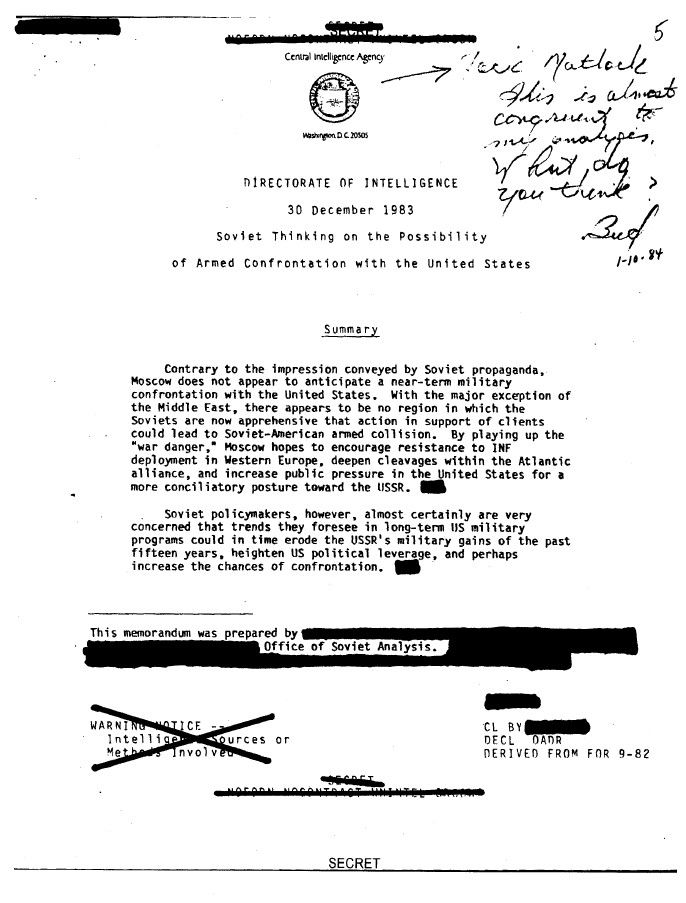
In briefing documents declassified from the 1960s and 1970s, analysts noted that Naacal symbols showed characteristics similar to:
subliminal priming sequences
early neuro-linguistic patterns
symbolic saturation techniques
psychological anchoring used in covert operations
In other words:a prehistoric blueprint for cognitive warfare.
The modern reappearance of the code
In The Naacal Protocol – Code 211, this historical and scientific ambiguity becomes the foundation for a geopolitical thriller. The “Naacal” are not treated as a lost tribe, but as the authors of a method—a cognitive architecture capable of influencing perception across generations.
What ancient civilizations carved into stone, modern intelligence seeks to rebuild with:
neural mapping
AI-driven behavioral prediction
frequency-based perception modulation
algorithmic control of attention
What was once spiritual symbolism becomes neuro-algorithmic power.
The past was not simply mystical. It was methodical.
Why the Naacal matter today
The fascination is not archaeological. It is strategic.
If the Naacal developed a universal symbolic system capable of shaping perception, then they created something modern powers desperately seek:a tool to influence how humans interpret reality itself.
In a century defined by cognitive warfare, information overload, and algorithmic steering, the forgotten symbols of the Naacal may represent the earliest chapter of a story still unfolding today.
And that is why the enigma remains relevant—because it suggests that someone, long before us, understood that the real battlefield was not land or gold or empire.
It was perception.
The past, it seems, was not silent. It was encoded.


Comments