Peace as a Threat: Why Russian Security Services Depend on Permanent Tension

Russia Fears Peace
The Hidden Infrastructure of Permanent Conflict
by Adelio Debenedetti, author of The Naacal Protocol – Code 211
Peace as a threat
When analysts talk about modern Russia, the conversation tends to stay on the surface — wars, diplomatic standoffs, military buildups, geopolitical confrontations. What rarely gets discussed is the infrastructure operating behind all of it: the dense network of political, military, and intelligence institutions that have spent decades evolving inside an environment of near-permanent tension. Understanding that infrastructure may matter more than following any single crisis. Because the most revealing question about Moscow isn't whether it prefers war. It's what happens to its power structures when stability becomes the dominant condition.

The Cold War Never Fully Ended — It Just Changed Shape
During the Cold War, the Soviet Union built one of the most extensive security architectures in modern history. The KGB wasn't just an intelligence service — it was a system of surveillance, political influence, information control, and regime protection operating at a scale few Western institutions could match. Meanwhile, NATO developed its own deterrence structures along the world's most critical strategic chokepoints, none more important than the GIUK Gap, the maritime corridor running between Greenland, Iceland, and the United Kingdom.
For decades, that stretch of North Atlantic water was an invisible frontier — Soviet submarines, Western surveillance networks, and intelligence services locked in a continuous, largely silent competition. Tension wasn't an accident. It was the normal operating condition of the entire system. When the Soviet Union collapsed in 1991, many observers assumed these structures would gradually fade into irrelevance. What actually happened was more interesting: the institutions changed. The underlying logic survived.
Meet the Apparatus
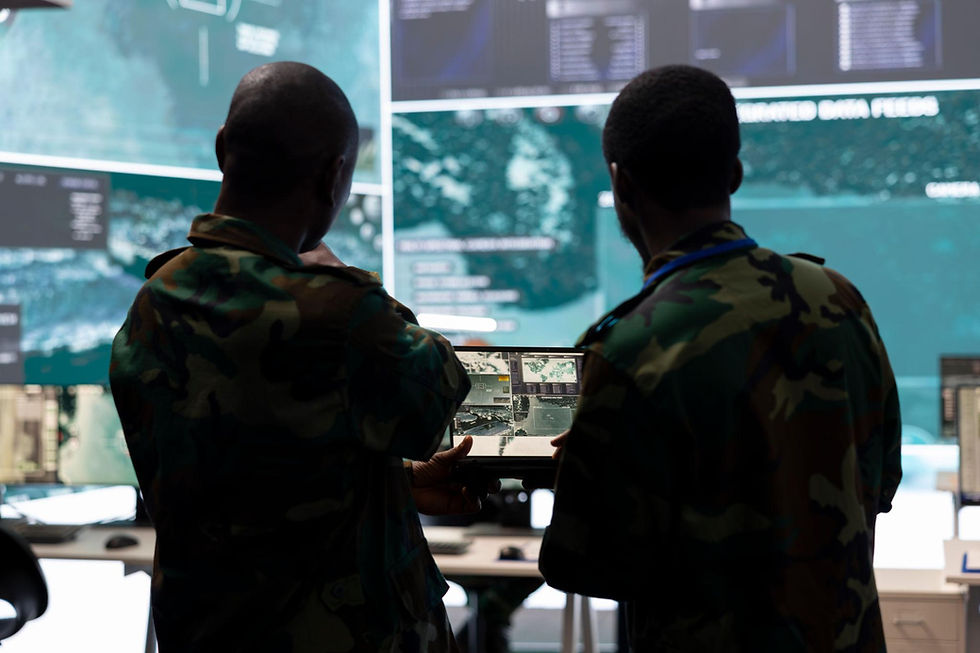
Russia's national security architecture today rests on three major pillars. The FSB handles internal security and counterintelligence. The SVR runs foreign intelligence operations. The GRU serves as military intelligence. Each of these organizations has developed within an environment shaped — and in many ways defined — by the perception of constant external threats.
That perception isn't entirely manufactured. Russia has vast borders, serious geographic vulnerabilities, and a national memory still deeply marked by invasion and military catastrophe. But there's a crucial distinction between confronting threats and becoming structurally dependent on their existence. When an institution is built to operate in a state of permanent emergency, stability doesn't just feel unfamiliar — it can become an organizational problem. Fewer crises can mean less strategic relevance. Less relevance translates into reduced political influence. And in Russia, political influence is institutional survival.
The Logic of Permanent Tension
Security organizations don't run on military logic alone. Like any major institution — in any country — they compete for budgets, personnel, access to information, and proximity to power. History shows, consistently, that organizations created to confront existential threats tend to justify their continued importance through the persistence of those threats. This isn't always the product of deliberate manipulation. More often it's simply how large bureaucracies behave.
Russia offers a particularly clear case study. The narrative of a nation under siege — a theme woven through centuries of Russian political culture — creates an environment in which security institutions occupy a permanent and privileged position in public life. Crisis isn't the exception. It's the baseline.
From the Cold War to the Grey Zone
Modern great-power competition rarely looks like the wars of the twentieth century. Most strategic activity today takes place well below the threshold of open conflict — cyber operations, influence campaigns, disinformation, infrastructure sabotage, economic pressure, covert action. This is the domain analysts call the Grey Zone: the ambiguous space where states pursue strategic objectives without triggering conventional military escalation.
For organizations like the FSB, GRU, and SVR, this environment is close to ideal. Tension stays constant. Outright war remains avoidable. The operational relevance of the security services stays intact. The Grey Zone isn't just a theater of competition — for these institutions, it's a reason to exist.

Why Peace Could Be the Real Threat
Here's the paradox that rarely gets named directly: a durable, sustained peace may create institutional challenges that controlled tension never does. A genuine reduction in international confrontation would force some uncomfortable questions inside Moscow's corridors of power. Would current levels of security spending still be defensible? Would intelligence services retain the same political weight? Would vast operational networks remain justifiable to a public focused on economic development rather than national security threats?
These aren't abstract questions. They surface whenever a state's strategic environment shifts significantly. Russia is no exception — and its security apparatus knows it.
This Isn't Just a Russia Story
The Russian case is the most visible, but the phenomenon runs much deeper. China's security establishment faces structurally similar dynamics. Iran has built a substantial portion of its regional influence on the management of strategic tension — dial down the threat, and the rationale for many of its most powerful institutions weakens. Even certain Western organizations born during the Cold War have found ways to sustain relevance by pointing to a security environment that never quite stabilizes.
Grey Zones aren't just geographic spaces. They're operational conditions — ecosystems in which intelligence services, security institutions, and hidden power structures find their purpose and their justification. And in the twenty-first century, understanding those ecosystems may matter more than tracking any individual conflict. Because the most consequential struggles aren't always fought on the battlefield. They're fought inside the invisible architecture of permanent competition — and that architecture has a powerful interest in staying exactly where it is.
This article is part of the Grey Zones Archive editorial project, a long-form analysis series focused on Arctic geopolitics, strategic chokepoints, cognitive warfare, hybrid conflict, dual-use infrastructure and the evolving balance of power in the 21st century. The analyses published on The Naacal Protocol Blog explore the increasingly blurred line between intelligence, strategic geography and contemporary geopolitical narratives, in continuity with the research-based universe of The Naacal Protocol – Code 211 by Adelio Debenedetti.
Security institutions are rarely dismantled when conflicts end. More often, they evolve, adapting their missions to preserve strategic relevance in a changing geopolitical environment.


Comments